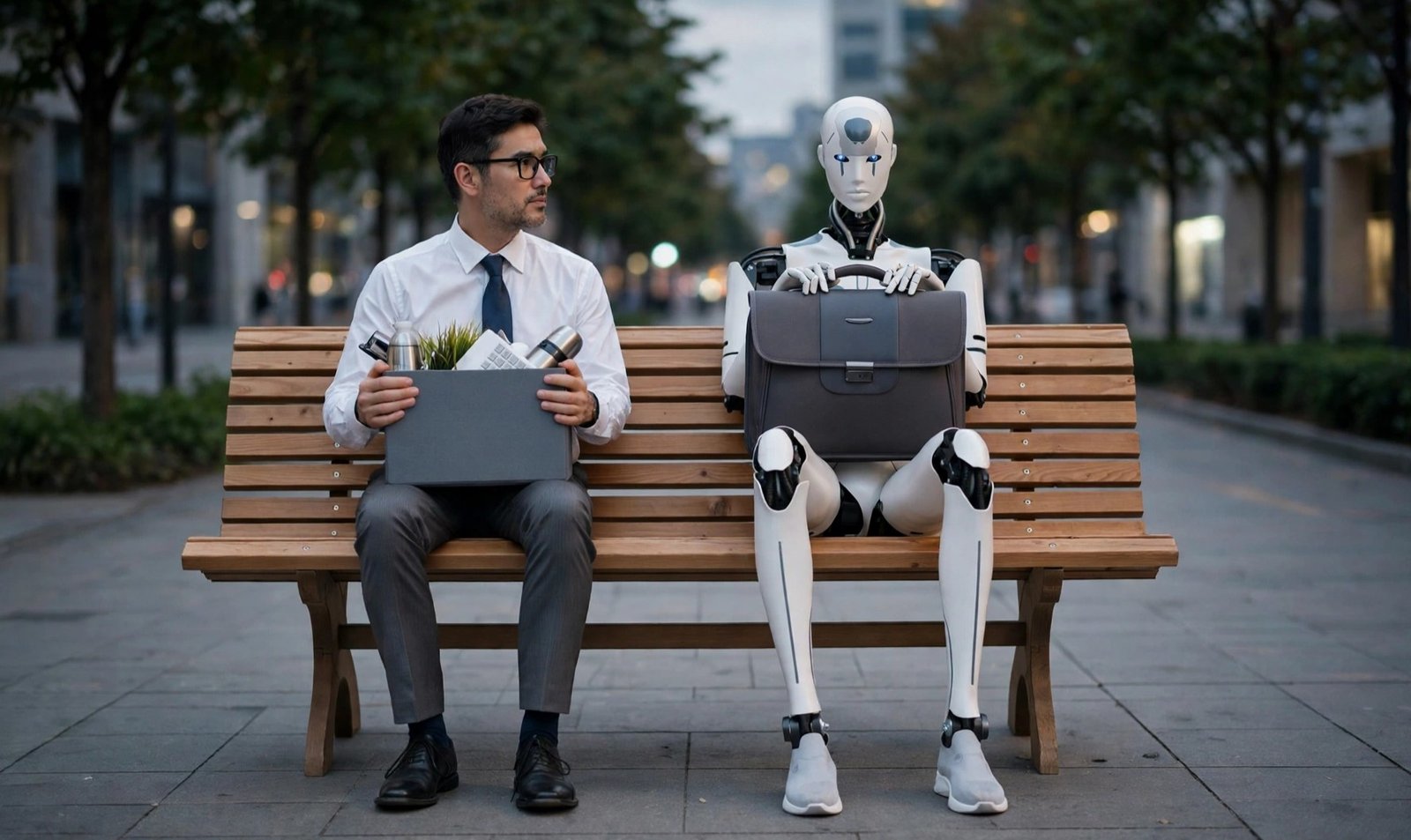
Will AI replace jobs? Honestly, it’s the question everyone is asking right now.
You see headlines every day. AI wrote this. AI did that. It’s scary. I get it.
I was worried too when I first saw ChatGPT write a full blog post in 10 seconds.
But after using these tools daily for the last year, here is the real truth. It’s not as simple as yes or no.
Let’s talk about it properly. No fluff.
Before we go deep, you should know the basics of how this tech actually works. If you are new to this, check this simple guide on generative AI basics. It will make everything else I say way clearer.
Let’s Be Real: Will AI Replace Jobs Completely?
Short answer? No.
Long answer? It will replace _tasks_, not entire jobs.
Think about it: What does your job really include?
It’s not just one task. It’s emails, meetings, ideas, talking to clients, fixing mistakes, making decisions.
AI is super good at one part of that. But terrible at the other parts.
A writer doesn’t just write. He researches, talks to people, feels emotions. AI can write the draft. It can’t feel.
So no, AI will not come and steal your chair tomorrow. But it will change how you sit on it.
Jobs That Are Actually At Risk
Let’s be honest. Some jobs are in danger. We can’t sugarcoat it.
If your job is doing the same boring thing again and again, AI is coming for it.
Here are the ones that should worry a bit:
- Data Entry Clerks: AI can read and type 100x faster. And it doesn’t get tired.
- Basic Customer Support: Those simple “Where is my order?” chats? AI chatbots already do it.
- Telemarketers: No one likes those calls anyway. AI voice is cheaper.
- Simple Proofreading / Translation: Grammarly and DeepL are already better than most beginners.
- Basic Graphic Work: Like making 100 similar social media templates. AI tools like Canva AI do it in seconds.
The thing is, these jobs are all about repetition. No creativity. No human touch. That’s easy for AI.
Jobs That Are 100% Safe (For Now)
Good news. Some jobs are super safe. Like, really safe.
If your job needs a human heart, human hands, or human trust, you are fine.
- Skilled Trades: Plumber? Electrician? Carpenter? AI can’t fix a leaking pipe under your sink. Not in the next 50 years.
- Nurses and Caregivers: Would you want a robot to take care of your sick mom? No way. We need humans.
- Teachers: A great teacher doesn’t just give info. They motivate; they understand a sad kid. AI can’t do that.
- Creative Leaders: Not just designers. But art directors, brand strategists, film directors. People who have a vision.
- Therapists and Counselors: Talking about feelings needs real empathy. AI can fake it, but we know it’s fake.
If you work with people, not just data, you are in a good spot.
So How Will AI Actually Change Your Job?
This is the part no one talks about. It’s not about replacement. It’s about change.
Most of us will not lose our jobs. We will just do them differently.
1. You will become way faster.
Think of AI as your super-fast intern. You tell it, “Make me 10 email ideas,” and it does. You just pick the best one.
Tasks that took 3 hours will take 30 minutes.
2. The boring work will disappear.
No more writing meeting notes manually. No more making boring reports. AI will do that. You can focus on the fun, important stuff.
3. New jobs will pop up that we never imagined.
Seriously. Three years ago, “Prompt Engineer” was not a job. Now people make $100k doing it.
Future jobs: AI Trainer, AI Ethics Officer, AI Workflow Manager. These are real now.
So the question should not be: will AI replace jobs? The real question is, will you learn to use AI before someone else does?
Because the person who knows AI will replace the person who doesn’t; that’s the truth.
Will AI Replace Jobs In The Next 5 Years? Let’s Predict
Okay, let’s make a prediction. Simple and real.
In the next 5 years, I think this is what will happen:
- About 15-20% of tasks in office jobs will be automated. Not the whole job.
- Companies will hire less for entry-level repetitive work.
- They will pay MORE for people who can manage AI tools and still think like a human.
- Freelancers who use AI will make double money because they can do more work.
It’s not the end of work. It’s the start of faster work.
If you are a student right now, don’t pick a career based on fear. Pick it based on what AI _can’t_ do. Be creative. Be human. Be good with people.
My Simple Advice To Stay Relevant
You don’t need to become a coder. You just need to be smart about it.
Here’s what I did and it worked:
- Use one AI tool every day. Even for 15 minutes. ChatGPT, Claude, whatever. Just get used to it.
- Learn to ask better questions. AI is useless if you ask bad prompts. Good prompts = good results.
- Double down on human skills. Communication, leadership, storytelling, sales. Robots are terrible at this.
- Never stop learning. Watch a YouTube video about AI in your field every week. That’s it.
The future belongs to humans who know how to use machines. Not to machines alone.
To understand the bigger picture of how work is shifting globally, you should read the World Economic Forum Future of Jobs report. It has real data from big companies.
And if you want to know what normal workers in the US really think about AI, this Pew Research study on AI in the workplace is eye-opening. It shows most people are worried, but also hopeful.
At the end of the day, your job is safe if you keep evolving. AI is a tool. Not your boss.
So learn it. Use it. Don’t fear it.
FAQ
Will AI replace jobs in 2025?
No, AI will not replace all jobs in 2025. It will automate repetitive tasks and change how we work, but jobs needing human creativity, empathy, and hands-on skills are very safe.
Which jobs will AI replace first?
Jobs with repetitive tasks like data entry, basic customer support, telemarketing, and simple translation are most at risk of being automated by AI first.
How can I protect my job from AI?
Learn to use AI tools daily, improve human skills like communication and leadership, and focus on creative problem-solving. People who use AI will replace people who don’t.